
The Piezoelectric Effect: Core Principles of Piezoceramic Technology
Piezoelectric Working Principle, Perovskite and Polarization
Piezoelectricity refers to the property of certain crystals that produce electric charges under compression or tension, known as the direct piezoelectric effect. In contrast, an external electric field will cause these crystals to deform in a regulated manner, which is defined as the inverse piezoelectric effect. The polarity of the generated charges is determined by the crystal orientation and the direction of applied force.

- The Direct Piezoelectric Effect:
The ability of specific crystals to generate an electrical charge when subjected to mechanical force, such as pressure or tension. The polarity of the generated charge is directly determined by the orientation of the crystal relative to the direction of the applied force.
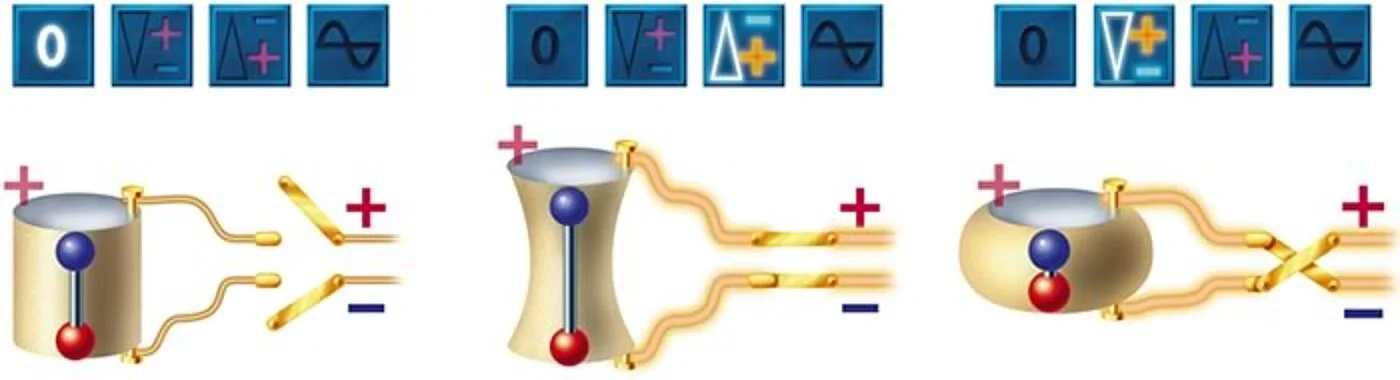
- The Inverse Piezoelectric Effect:
Conversely, when these same crystals are exposed to an external electric field, they undergo a controlled physical deformation.
Material Structure & Polarization
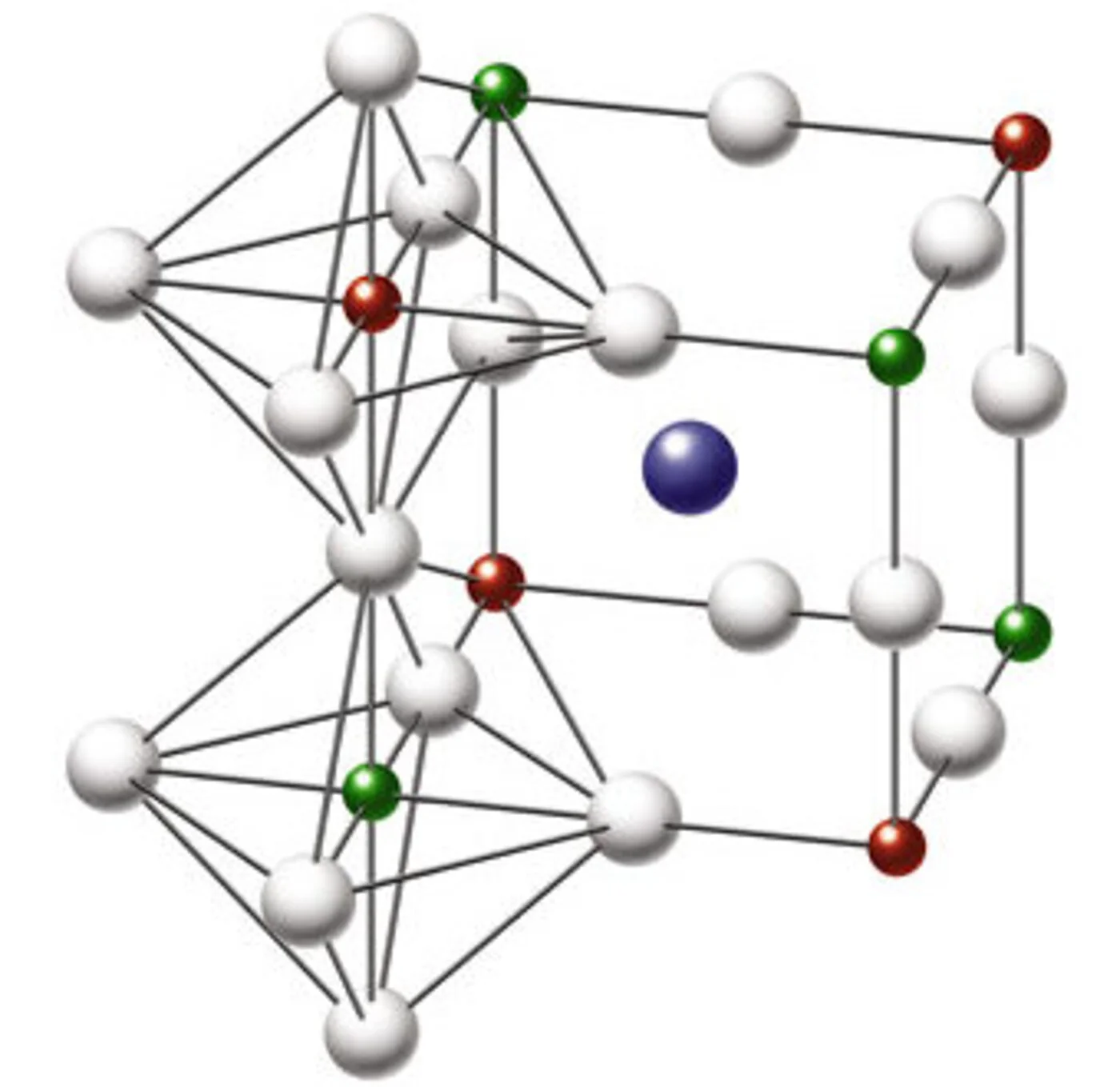
Ceramics exhibiting piezoelectric properties belong to the group of ferroelectric materials. Today’s systems are almost exclusively based on lead zirconate titanate (PZT); i.e., they consist of mixed crystals of lead zirconate (PbZrO3) and lead titanate (PbTiO3). Piezoceramic components have a polycrystalline structure comprising numerous crystallites (domains) each of which consists of a plurality of elementary cells. The elementary cells of these ferroelectric ceramics exhibit the perovskite crystal structure, which can generally be described by the structural formula A2+B4+O32-.
Schematic diagram of an ideal perovskite structure, neglecting distortions due to spontaneous polarization below Curie temperature. The bivalent cation is located in the center of the cube, while the tetravalent cations form the cube corners. The bivalent anions are located in the center of each cube edge in this illustration. For the PZT (lead zirconate titanate) mixed crystal, the formula is: A: Pb2+, B: Ti4+ / Zr4+
Piezoelectric Properties through Polarization

Image: Before, during and after polarisation
Achieving Piezoelectric Properties
Immediately following the manufacturing (sintering) process, a ceramic body’s internal domains are statistically distributed and randomly oriented. At this stage, the macroscopic material is entirely isotropic and displays no piezoelectric properties.
To activate its piezoelectric capabilities, the material must undergo polarization:
- The ceramic body is exposed to a powerful direct current (DC) electric field.
- This strong field forces the internal electric dipoles to align uniformly in the direction of the field.
- Once the DC field is removed, the dipoles permanently lock into place (remanent polarization), which is the fundamental requirement for the material to exhibit functional piezoelectric behavior.

Leave A Comment