
Why Ultrasonic Cleaners Are a Green Option for Industrial Cleaning
The Problem with Solvent-Based Cleaning
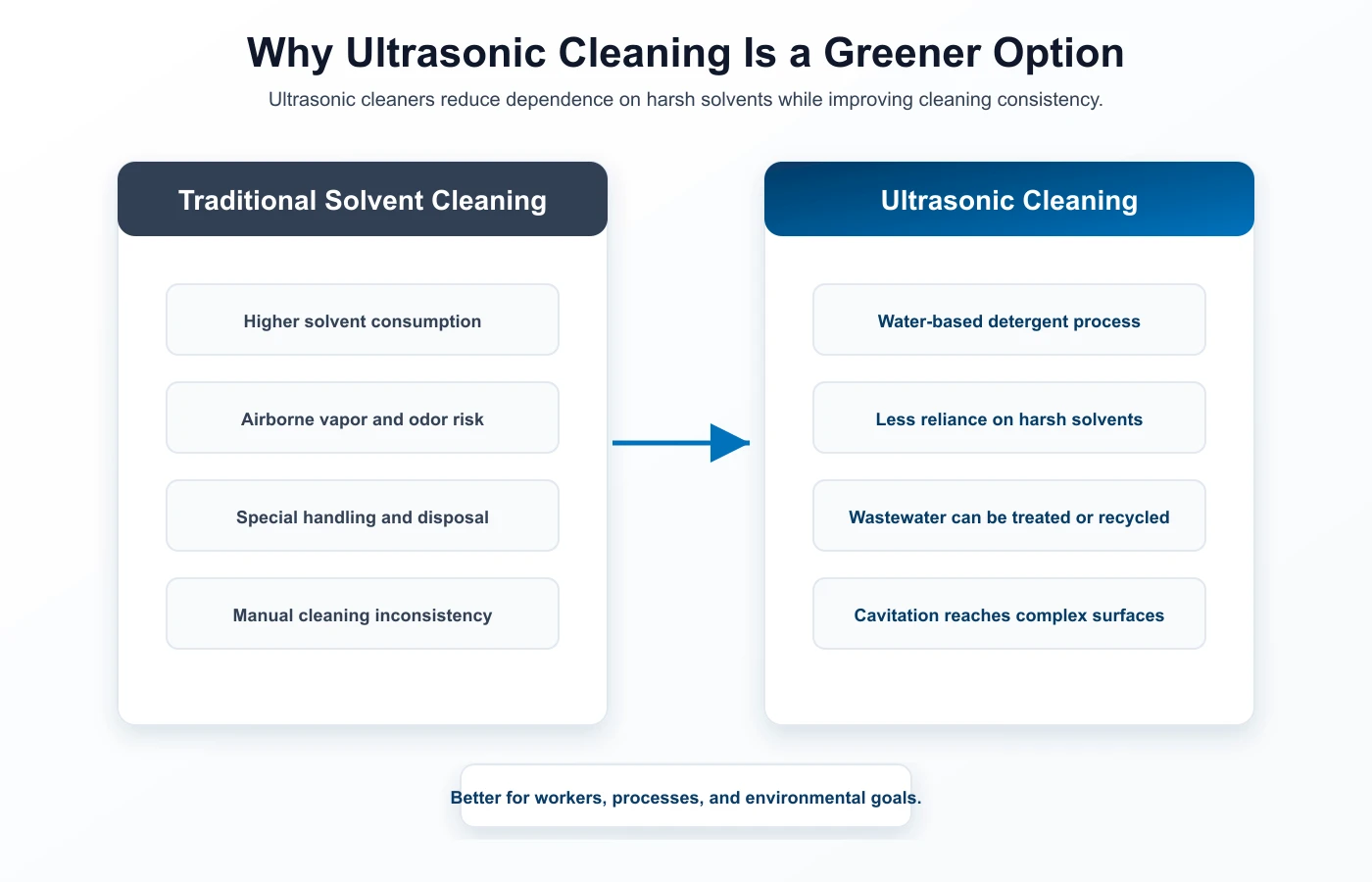
For decades, chemical solvents were widely used for removing difficult industrial contaminants. However, many traditional solvents are toxic, flammable, or harmful to the environment. Regulations have also become stricter as industries seek to reduce emissions, protect workers, and minimize environmental impact.
Even when solvents are applied in smaller amounts, such as through spray cans, they can still create problems. Some of the solvent may evaporate into the air, increasing worker exposure. Some may drip onto floors, equipment, or wastewater systems. In many cases, solvent waste requires special handling, storage, and disposal.
For manufacturers, this can lead to:
- Higher chemical purchasing costs
- Greater environmental compliance requirements
- Increased waste treatment costs
- Workplace safety concerns
- Strong odors and air quality issues
- Additional protective equipment and handling procedures
As a result, many companies are looking for a safer, cleaner, and more sustainable cleaning process.
Why Ultrasonic Cleaning Is More Environmentally Friendly
Ultrasonic cleaning usually uses water-based detergents rather than harsh chemical solvents. Many ultrasonic cleaning detergents are designed to be low-toxicity, biodegradable, and easier to manage than solvent-based cleaners.
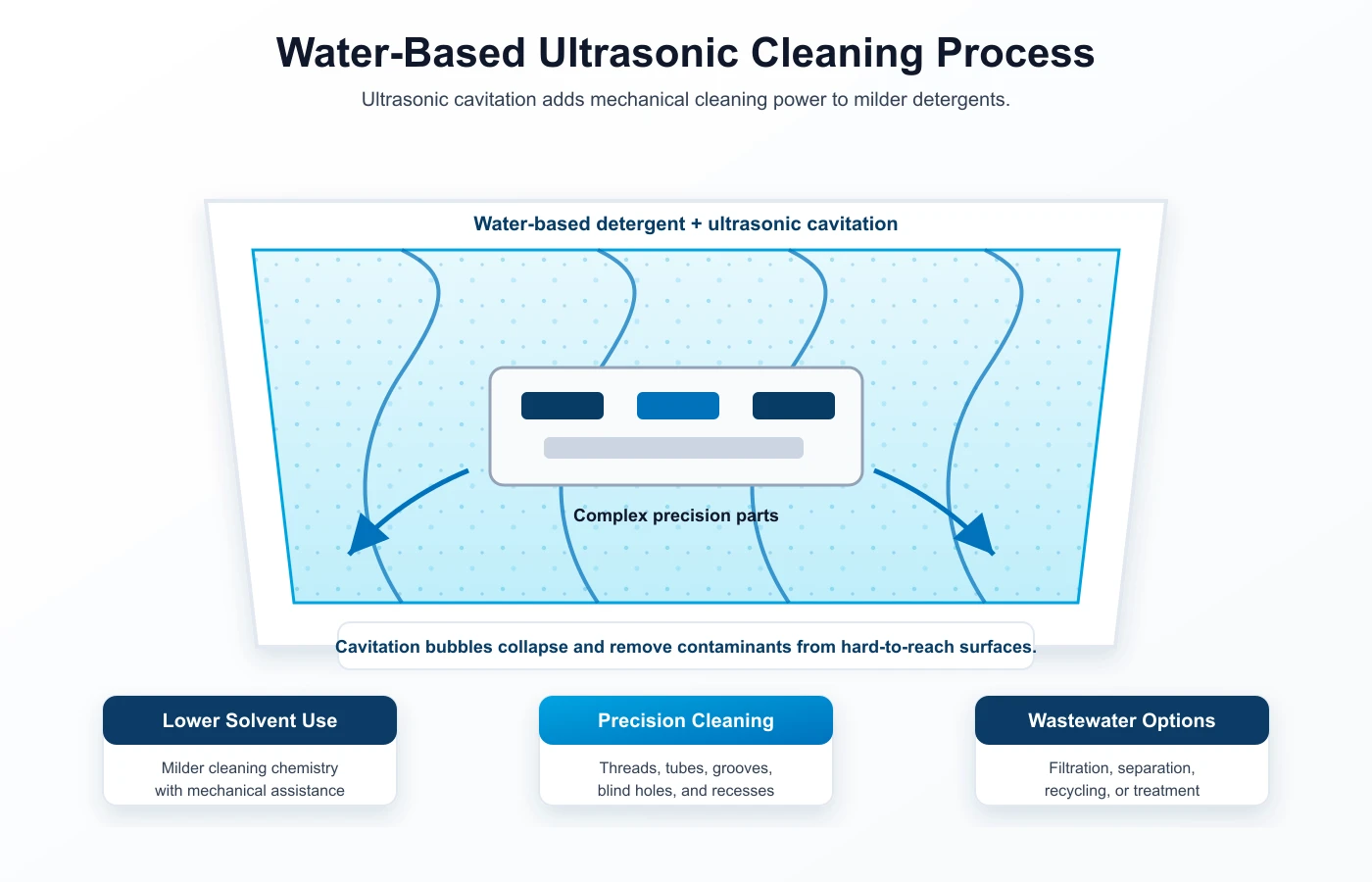
Instead of depending mainly on chemical strength, ultrasonic cleaners use mechanical energy in the liquid. High-frequency ultrasonic waves generate millions of microscopic cavitation bubbles. These bubbles rapidly form and collapse, creating strong local cleaning action on the surface of the part.
This means ultrasonic cleaning can achieve excellent results with milder cleaning solutions, lower chemical concentration, and reduced solvent use.
How Ultrasonic Cavitation Improves Cleaning Power
When an ultrasonic cleaner is operating, the transducer converts electrical energy into high-frequency mechanical vibration. This vibration travels through the cleaning liquid and creates cavitation.
Cavitation produces tiny bubbles that collapse with strong localized force. This force helps dislodge oil, particles, dust, polishing residue, and other contaminants from the part surface.
One major advantage is that cavitation can reach areas that are difficult to clean manually, including:
- Threads
- Blind holes
- Small gaps
- Internal tubes
- Grooves and recesses
- Complex precision surfaces
For parts that require detailed cleaning, ultrasonic cleaning can often achieve more consistent results than spraying, brushing, soaking, or manual wiping.
Water-Based Detergents and Wastewater Management
Although ultrasonic cleaning is a greener option, the wastewater still needs proper treatment. This is because contaminants removed from industrial parts may include oils, metal particles, process chemicals, or other residues.
The benefit is that wastewater from water-based ultrasonic cleaning is often easier to manage than solvent waste. Depending on the process and contaminants, manufacturers may use filtration, oil separation, flocculation, evaporation, or recycling systems to reduce waste volume and recover usable water.
With a well-designed cleaning process, companies can reduce chemical consumption, lower hazardous waste generation, and improve overall environmental performance.
Productivity Benefits of Ultrasonic Cleaning
Going green does not have to reduce productivity. In many cases, ultrasonic cleaning can improve it.
Because ultrasonic cavitation works across all immersed surfaces, multiple parts can often be cleaned at the same time. The process is also repeatable, which helps reduce manual labor and inconsistent cleaning quality.
Industrial ultrasonic cleaners can support:
- Faster cleaning cycles
- More consistent cleaning results
- Reduced manual scrubbing
- Better cleaning of complex geometries
- Lower rework and reject rates
- Safer working conditions
For precision cleaning, the combination of effective cleaning performance and reduced chemical exposure makes ultrasonic cleaning a practical choice for both environmental and operational goals.
Suitable Applications
Ultrasonic cleaning is widely used in industries that require reliable removal of contaminants from complex or precision parts.
Common applications include:
- Mechanical parts cleaning
- Automotive components
- Electronic components
- Medical instruments
- Optical parts
- Precision hardware
- Molds and tooling
- Metal parts after machining or polishing
- Tubes, fittings, and threaded components
By selecting the right frequency, tank size, detergent, temperature, and cleaning time, ultrasonic cleaning can be adapted to many industrial cleaning requirements.
IN A WORD
Ultrasonic cleaners are a green option for industrial cleaning because they reduce reliance on harsh solvents while delivering strong and repeatable cleaning performance. By using water-based detergents and ultrasonic cavitation, they can clean complex parts effectively with lower chemical impact.
For manufacturers, ultrasonic cleaning offers both environmental and business advantages: safer workplaces, reduced solvent use, easier wastewater management, improved cleaning consistency, and better productivity.
As industries continue to move toward cleaner and more sustainable production, ultrasonic cleaning provides a practical path to high-quality industrial cleaning with a lower environmental footprint.

Leave A Comment